Why Does My Dog Pull on Walks? Start With the Reason
Pulling is not one behavior with one cause. Learn how excitement, pace, environment, worry, and reinforcement can all change what happens at the end of the leash.
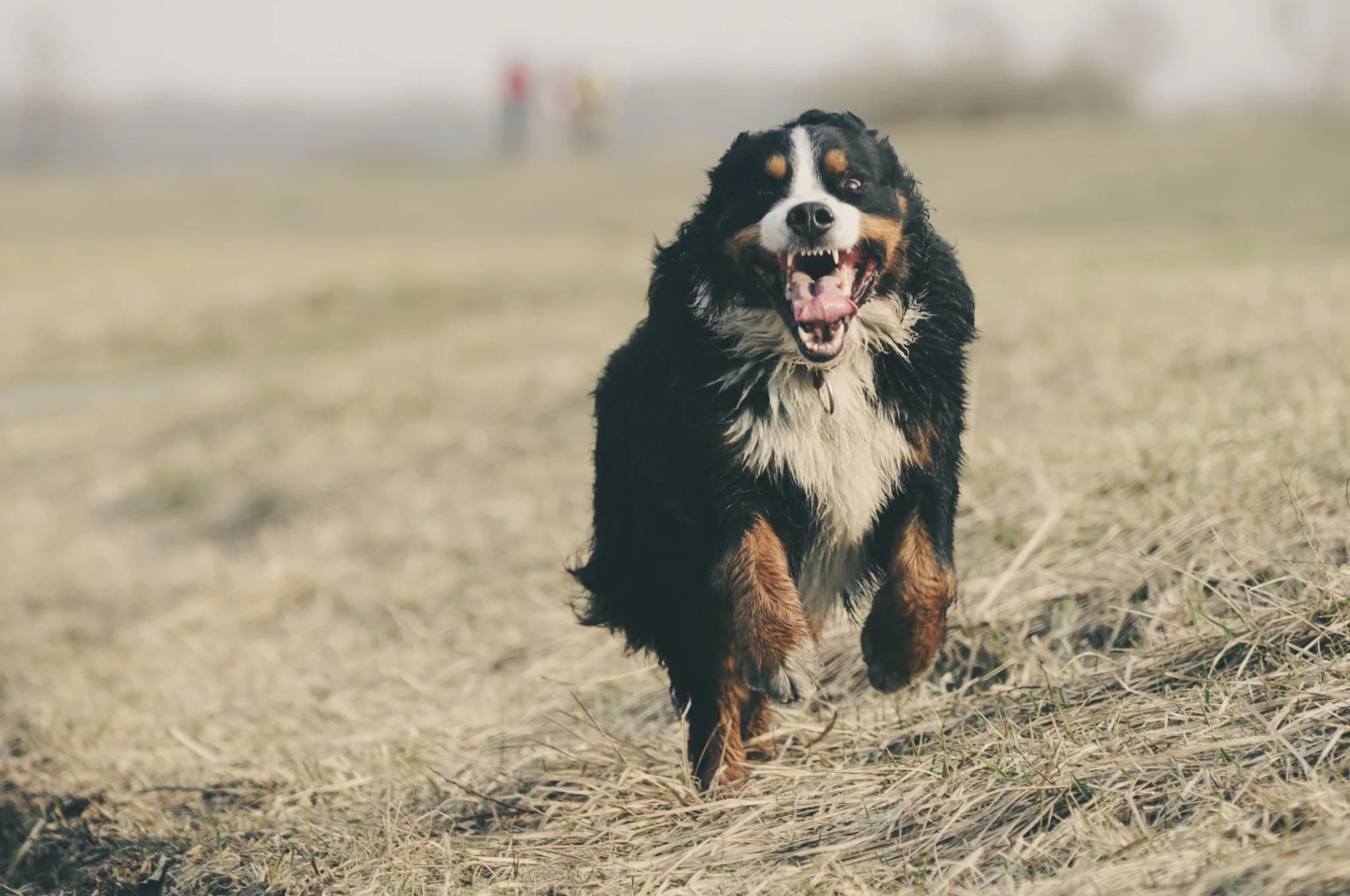
If your dog pulls from the front door to the end of the block, it is tempting to treat pulling as one problem with one fix. In practice, the reason matters.
A dog surging toward a squirrel is not necessarily doing the same thing as a dog trying to leave a noisy street, and neither is exactly the same as a young dog who has simply learned that pulling makes the walk move forward.
Start by looking for the pattern
For several walks, notice when the leash becomes tight rather than just counting how often.
Does pulling happen:
- Immediately after you leave home?
- Only around dogs or people?
- Near the park or another familiar destination?
- Around wildlife?
- On the way back to the car or house?
- After your dog has been indoors for a long time?
- In busy places but not quiet ones?
- Only when another family member holds the leash?
Patterns give you something specific to work with. They also stop you from changing equipment every week while leaving the trigger untouched.
Common reasons dogs pull
The environment ahead is rewarding
Dogs move toward smells, movement, grass, people, dogs, water, wildlife, food, and familiar places. If moving forward is valuable and the leash is the only thing slowing that down, tension is not surprising.
Your dog's natural pace is faster than yours
Many dogs simply move at a comfortable pace that is quicker than a human stroll. Asking for a permanently short leash can therefore require active training rather than expecting the dog's default pace to match ours.
Excitement raises speed
The first five minutes of a walk, the approach to a favorite field, or the sight of another dog can raise arousal enough that leash skills temporarily fall apart.
Frustration builds when access is blocked
A dog may see something they want and pull harder because the leash prevents access. In those moments, the pulling can be part of a larger frustration response rather than a simple walking habit.
Fear can look like pulling too
Some dogs pull away from a trigger or drag toward home, the car, or another place they consider safer. Treating that as stubbornness or "dominance" misses the actual problem.
Pulling has worked before
If the dog pulls, the human follows, and the dog reaches the tree, dog, doorway, or trail entrance, pulling has repeatedly produced a useful outcome.
That does not mean the owner has "ruined" the dog. It means the behavior has a history of being effective.
Management and training are different jobs
Equipment can change leverage and make a strong dog easier to handle. That can be valuable for safety.
But easier handling is not the same as teaching loose-leash walking.
A front attachment, back attachment, collar, or other setup changes mechanics. It does not decide why your dog wants to move ahead, and it does not automatically teach what you want instead.
Training changes the learned behavior. Management helps you get through the situation safely enough to train.
You may need both.
Define what "good walking" means for you
Loose-leash walking does not have to mean a formal heel for an entire neighborhood walk.
For many families, a realistic goal is:
- The leash stays mostly slack
- The dog can sniff and explore appropriately
- The handler can regain attention when needed
- The dog does not drag the person toward every interesting thing
- Both can move through ordinary distractions safely
A clear goal makes training less confusing than switching between "go sniff anywhere" and "stay glued to my knee" without telling the dog what has changed.
Make the practice environment easier
If your dog cannot respond around a crowded park, that is a difficult place to teach the first step.
Start somewhere quieter. Reinforce short stretches of a slack leash. Let appropriate forward movement happen when the leash is loose. Create sniff breaks intentionally rather than making every smell a battle.
Then increase difficulty gradually.
A skill that exists on an empty sidewalk is not automatically ready for a squirrel-filled trail.
Use rewards that matter on a walk
Food can be useful, but it is not the only reward available.
For a dog who desperately wants to sniff a tree, access to that tree can be a meaningful consequence for walking there on a loose leash. For another dog, moving forward, greeting a familiar person, or reaching a grassy area may be highly valuable.
The practical question is: What does my dog want right now, and can I use that outcome to reinforce the behavior I want?
Avoid turning every walk into a test
Dogs need opportunities to move, sniff, toilet, and explore. If every outing becomes continuous obedience practice, frustration can rise for both ends of the leash.
Short training periods inside a more relaxed walk can be easier to sustain. Some dogs also benefit from separate sniff-oriented walks where the goal is not perfect position but safe, thoughtful exploration.
Pulling can be information
A sudden change deserves a different mindset.
If a dog who normally walks comfortably begins dragging toward home, refusing a route, moving unevenly, panting unusually, slowing dramatically, or reacting to ordinary situations, look beyond training.
Paw irritation, pain, heat, equipment discomfort, fear, illness, or another physical or environmental change may be part of the picture.
When another dog is the trigger
If pulling appears mainly around dogs, notice the emotional pattern before deciding it is simply bad leash manners.
Is your dog loose and eager to greet? Stiff and staring? Barking and lunging? Trying to retreat? Unable to take food or respond at the usual distance?
Those differences matter. A dog who is frightened, over-aroused, or reactive may need a behavior plan built around distance and emotional response, not just stronger equipment.
What to do on your next walk
Try this simple audit:
1. Identify the three places or situations where pulling is strongest. 2. Ask what your dog appears to want in each one. 3. Decide whether your immediate priority is management, training, or both. 4. Choose one easier environment for deliberate loose-leash practice. 5. Reward the behavior you actually want to see again. 6. Give your dog appropriate opportunities to sniff and explore. 7. Keep equipment secure and comfortable. 8. Reassess sudden or unusual changes instead of automatically adding more restraint.
The TrailHarness takeaway
The most useful question is not, "What stops pulling fastest?"
It is: "What is my dog trying to get to, get away from, or repeat right now?"
Once you can answer that, you can choose equipment for management, training for learning, and an environment where your dog has a realistic chance to succeed.
Research & further reading
Sources behind this explainer
Keep exploring